
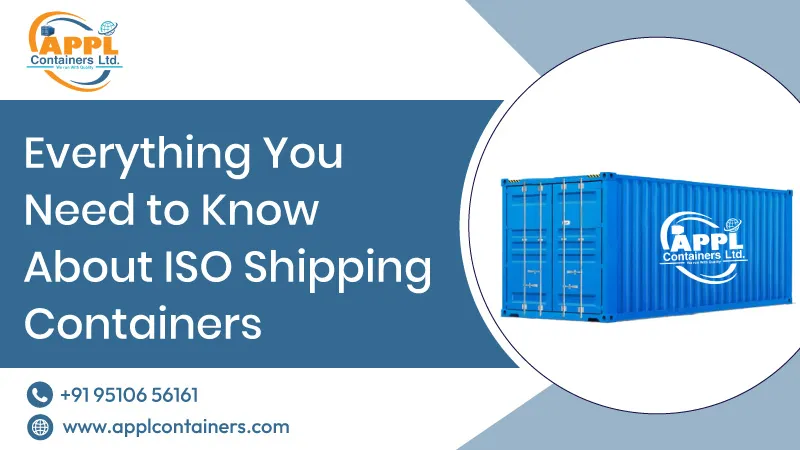
Global trade, logistics, and modern transportation depend heavily on standardized systems that allow goods to move safely and efficiently across borders. One of the most important elements behind this global movement is the ISO Shipping Container. From ports and rail terminals to warehouses and industrial sites, these containers form the backbone of international supply chains. Understanding how they work, why they matter, and how to choose the right one can help businesses improve cargo handling, reduce risks, and streamline operations.
What Is an ISO Shipping Container?
An ISO Shipping Container is a standardized steel container designed according to specifications set by the International Organization for Standardization (ISO). These specifications define dimensions, strength, and handling requirements so containers can be used seamlessly across ships, trucks, and rail systems worldwide.
The primary goal of ISO standards is compatibility. A container manufactured in one country can be transported, stacked, lifted, and stored anywhere in the world without modification. This universal design supports efficient global trade and reduces delays caused by incompatible cargo units.
Why ISO Standards Matter in Global Logistics
ISO standards play a major role in making international transportation predictable and reliable. When containers follow a common design framework, logistics providers can plan routes, stacking systems, and handling equipment with confidence.
ISO-compliant containers support:
- Smooth intermodal transport across sea, road, and rail
- Faster port operations due to uniform sizes
- Safer stacking and lifting during transit
- Better cargo protection through tested structural strength
Common Sizes of ISO Shipping Containers
ISO shipping containers come in various standardized sizes to accommodate different cargo needs. The most commonly used lengths include 20-foot and 40-foot containers, though specialized sizes are also available.
Standard containers are designed to balance capacity with handling efficiency. Their dimensions allow them to fit neatly on container ships, trailers, and rail wagons. High cube variants provide extra internal height, which helps when transporting taller cargo or maximizing volume.
Materials and Structural Design
Most ISO shipping containers are manufactured using high strength corten steel. This material resists corrosion and withstands harsh marine environments. The container floor is typically made from treated hardwood or bamboo-based panels supported by steel cross members.
The structure includes reinforced corner posts, which play a key role in lifting and stacking. Corner castings allow containers to be secured using twist locks during transport. This standardized design contributes to the durability and long service life of an ISO Shipping Container.
How ISO Shipping Containers Are Used Across Industries
ISO shipping containers are widely used across multiple industries due to their adaptability and strength. In logistics and trade, they transport raw materials, finished goods, and industrial equipment. In construction work, containers are reused as site offices, storage spaces, and modular structures.
Manufacturing facilities use containers for equipment, transport and temporary storage. Retail and e-commerce companies rely on containerized shipping to move goods efficiently between distribution centers. Even energy and infrastructure projects use containers for moving heavy components and tools.
Safety and Handling Considerations
Handling ISO shipping containers requires adherence to proper safety practices. Containers must be lifted using certified equipment and secured correctly during transit. Weight distribution inside the container plays a major role in stability.
Cargo should be properly packed and restrained to prevent movement. Container condition checks help identify issues such as corrosion, floor damage, or door seal problems. Following these practices improves cargo protection and extends container lifespan.
Benefits of Using ISO Shipping Containers
The widespread adoption of ISO shipping containers is driven by their many advantages. Standardization reduces handling complexity and supports predictable logistics planning. Strong construction protects cargo during long journeys across land and sea.
Cost efficiency is another major benefit. Containers allow bulk transport of goods with minimal handling, reducing labor costs and transit times. Reusability and durability add long-term value, making the ISO Shipping Container a practical investment for businesses involved in frequent cargo movement.
ISO Shipping Containers in Sustainable Logistics
Sustainability has become an important focus in modern logistics. ISO shipping containers contribute positively by supporting reusable transport systems. Because they last longer, replacements are needed less often.
Many containers are repurposed after their shipping life, finding new uses in storage, housing, retail spaces, and infrastructure projects. This adaptability aligns with circular economy principles and responsible resource usage.
Choosing the Right ISO Shipping Container
Selecting the right container depends on cargo type, weight, dimensions, and handling requirements. Businesses must consider whether standard, high cube, open top, or specialized containers suit their needs.
Working with experienced manufacturers and suppliers helps identify the most suitable container specifications. A well-chosen ISO Shipping Container supports smooth operations and reduces risks throughout the supply chain.
Why ISO Compliance Is Important for Businesses
ISO compliance signals reliability and quality. Containers that meet ISO standards are widely accepted by shipping lines, ports, and customs authorities. This acceptance reduces documentation issues and operational delays.
Using non-standard containers can create complications during transport, stacking, or inspection. ISO compliance simplifies logistics planning and builds trust among partners involved in cargo movement.
Why Choose Us
Appl Container stands out as a dependable provider of high-quality container solutions designed to meet global standards and diverse industry requirements. With a strong focus on manufacturing quality, structural reliability, and customer needs, Appl Container offers container options suitable for logistics, industrial, and commercial applications.
Appl Container works closely with clients to understand operational challenges and recommend container solutions aligned with cargo type and usage conditions. By combining industry expertise with a commitment to consistent quality, Appl Container has built a reputation for supporting efficient and professional cargo handling across multiple sectors.
Conclusion
ISO shipping containers have transformed global trade by introducing standardization, safety, and efficiency into cargo transportation. Their uniform design allows goods to move smoothly across international borders while maintaining cargo protection and handling reliability.
From logistics and manufacturing to construction and infrastructure, ISO shipping containers continue to support diverse industries. Choosing the right container type and working with trusted manufacturers helps businesses optimize operations and manage cargo with confidence. As global trade continues to expand, ISO-compliant containers remain a vital element in modern supply chains, supporting consistent and scalable transportation solutions worldwide.
Want to learn more about ISO Shipping Containers? Call us at +91 9510656161 or email info@applcontainers.com
Key Takeaways
- ISO Shipping Containers are globally standardized, allowing seamless transport across ships, trucks, and rail without compatibility issues.
- Different ISO container types serve different cargo needs, including dry, high cube, open top, flat rack, and refrigerated containers.
- Strong steel construction and standardized corner fittings provide durability, safe stacking, and secure handling during transit.
- ISO compliance simplifies international logistics, reduces delays, and improves acceptance by ports, shipping lines, and customs authorities.
- Choosing a reliable manufacturer like Appl Container helps businesses get quality, compliant containers that support efficient and professional cargo operations.